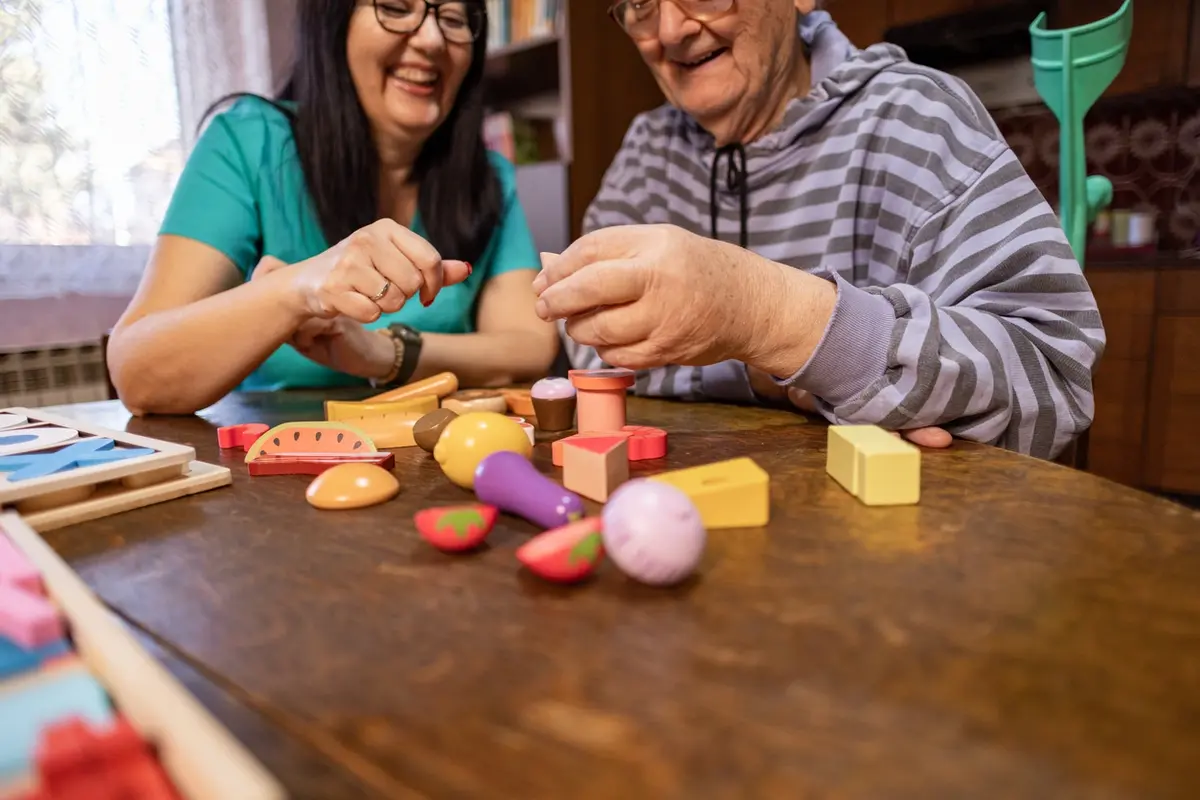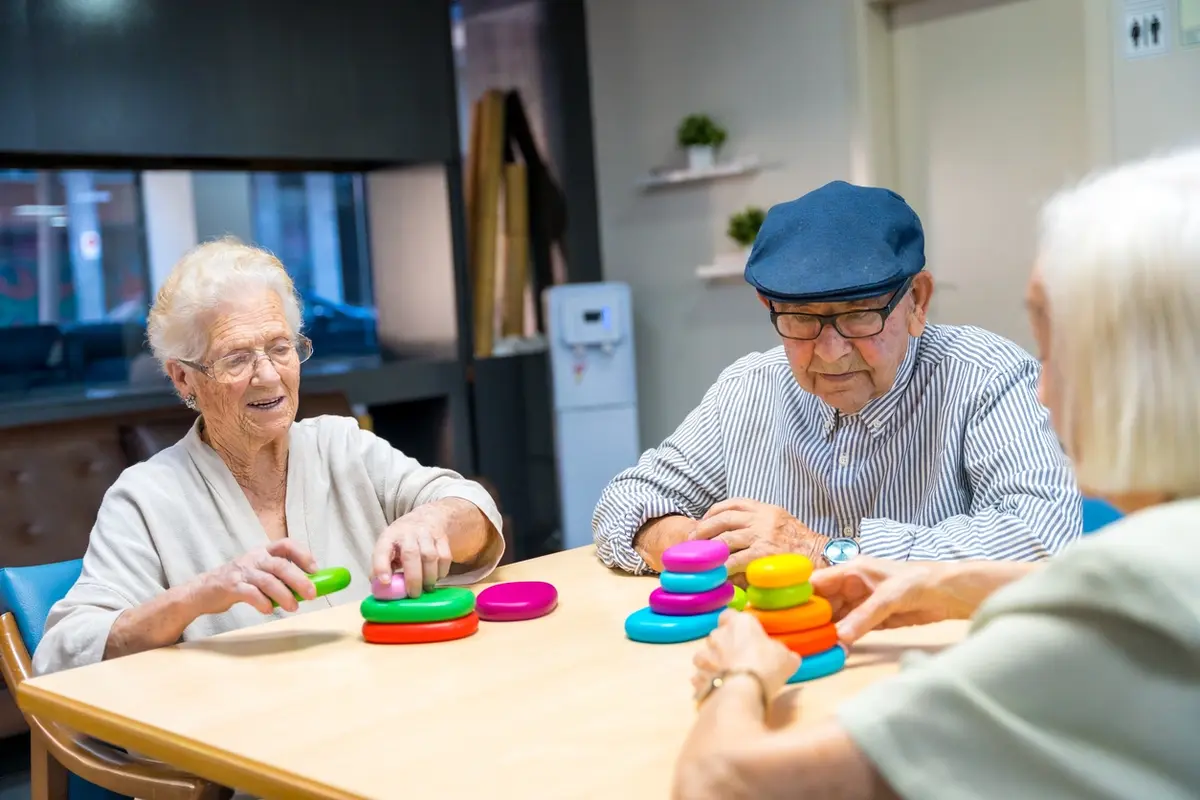
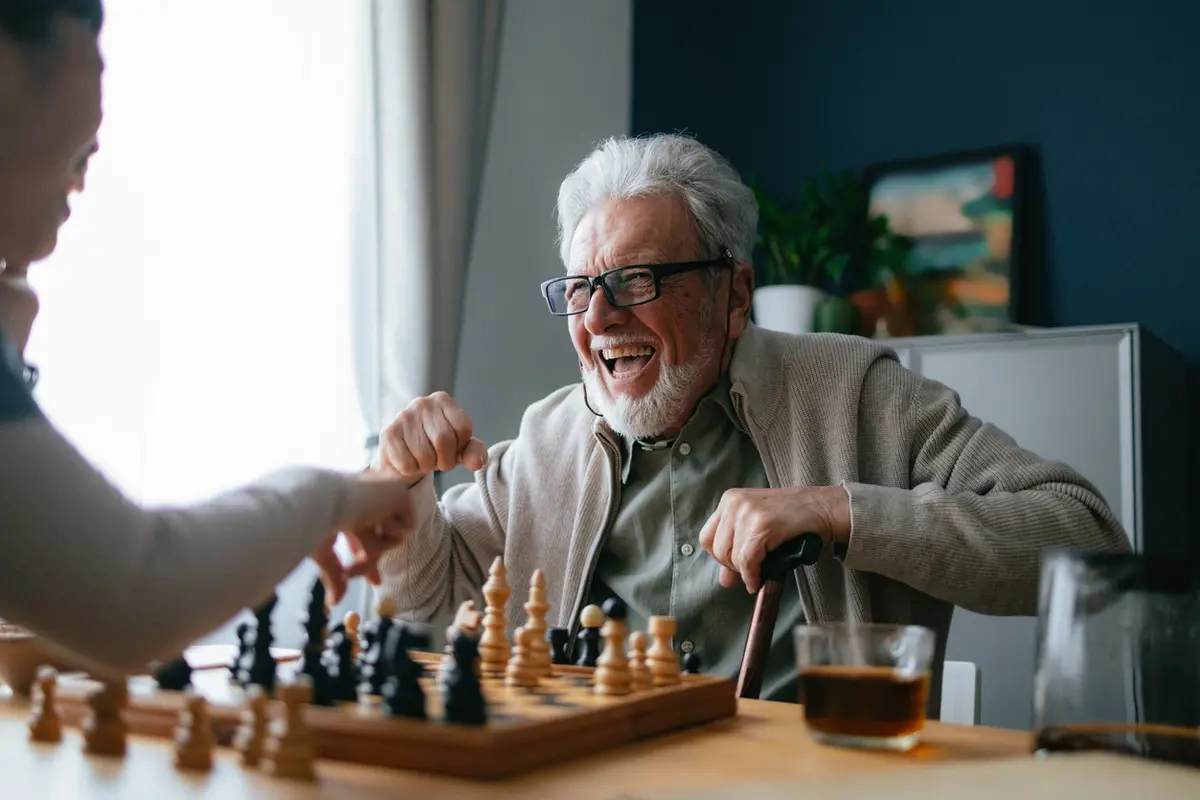
Does playing games help with dementia? Learn how simple games may support engagement, routine, memory practice, and quality time. Yes, playing games does help with dementia. Research shows that regular game play, including word puzzles, card games, and board games, can slow cognitive decline and improve memory, reasoning, and focus in older adults.
If you have a loved one living with dementia in Sparks, NV, or anywhere in the greater Reno area, adding games to their daily routine is one of the most practical and enjoyable steps you can take.
Why Games Matter for the Aging Brain
Your brain responds to mental activity the same way your body responds to physical movement. When you play games, you force it to focus, recall information, and solve problems. That process keeps more neural connections active.
A 2020 review published in the National Library of Medicine examined three types of games, board games, video games, and virtual reality, and found that participants with early to mid-stage dementia improved in short-term memory, problem-solving, reaction time, and logical reasoning. That is a meaningful result for families looking for real, low-cost options to support a loved one’s care.
Another key study found that people who did crossword puzzles regularly showed a 2.5-year delay in memory decline compared to those who did not.
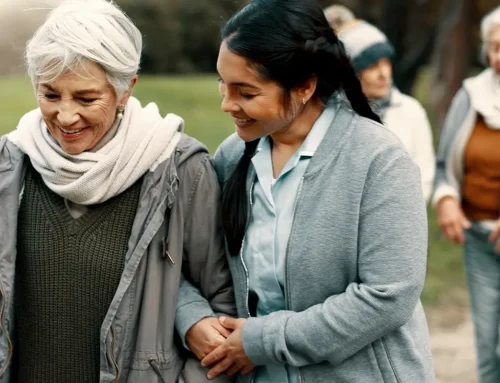
Games also reduce isolation. Many seniors in Sparks, NV spend hours alone each day. A simple card game or puzzle session creates a reason to connect with a caregiver, family member, or neighbor. That social engagement matters as much as the cognitive activity itself.
Related: Early Signs of Memory Loss in Older Adults
What Kind of Games Help With Dementia
Not every game has the same effect. The best ones are those that ask the brain to do something specific, recall words, plan moves, match patterns, or count. Here is what the research supports:
| Game Type | Examples | Cognitive Benefit |
| Word Puzzles | Crosswords, Wordle, Scrabble | Language, word recall, memory |
| Number Puzzles | Sudoku, number games | Attention, reasoning, memory |
| Card Games | Bridge, Rummy, Solitaire | Problem-solving, concentration |
| Board Games | Chess, Checkers, Monopoly | Strategic thinking, social skills |
| 3D Video Games | Super Mario, spatial exploration games | Spatial awareness, recognition memory |
Word Puzzles
Crosswords, Scrabble, and word searches engage language areas of the brain. Doing them even once a month has shown measurable benefits for adults over 50, but daily play produces the strongest results. Apps like Wordle are a modern, screen-based option your loved one may enjoy.
Number Puzzles
A study of nearly 20,000 adults over 50 found that doing number puzzles more than once a day put participants at a cognitive level 8 years younger than their actual age. Sudoku is the most accessible starting point.
Card and Board Games
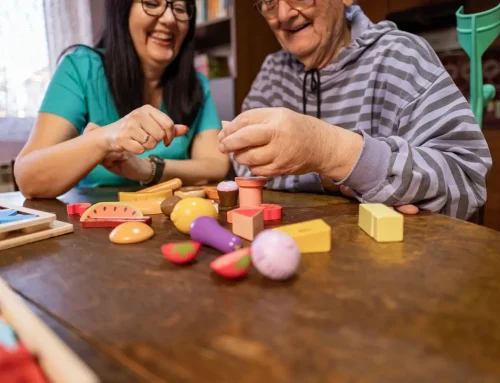
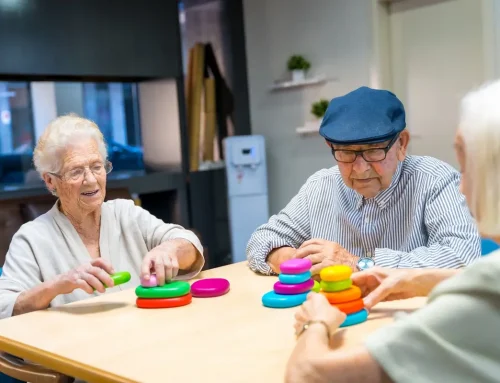
Games like Bridge, Rummy, Chess, and Checkers target problem-solving, concentration, and strategic thinking. A 2019 study found that board games specifically reduced cognitive decline in adults ages 70 to 79. These are also great choices for group activity at a memory care community.
Related: Benefits of Memory Care for Seniors and Families
How to Make Games Part of Your Loved One’s Daily Routine
Knowing games are helpful is one thing. Getting someone with dementia to actually play is another. Here are practical steps that work:
- Start with familiar games. If your loved one played Canasta or Solitaire in their 60s, go back to those. Familiar rules lower frustration.
- Keep sessions short. Aim for 20 to 30 minutes. Longer sessions can lead to fatigue or irritability.
- Sit beside them, not across. Side-by-side positioning feels less like a test and more like shared activity.
- Adjust difficulty over time. Start with simple puzzles. As they build confidence, increase the number of pieces or complexity of the game.
- Pair games with music. Familiar background music can ease anxiety and improve focus during game time.
If you are a caregiver in Sparks or Reno, this approach fits easily into a morning or afternoon routine. You do not need special equipment. A deck of cards, a crossword book, or a 300-piece jigsaw from any local store works just as well.
Things to Know Before You Start
- Games are not a cure. They support cognitive health and may slow decline, but they do not stop or reverse dementia.
- Consistency matters more than intensity. Fifteen minutes of crosswords every day does more than a two-hour puzzle session once a month.
- Social interaction amplifies the benefit. Playing with another person adds a layer of engagement that solo play does not provide.
- Frustration is a signal, not a failure. If your loved one gets frustrated, the game is too hard. Scale back without making a big deal of it.
- Screen time has limits. Digital games are fine, but limit blue light exposure in the evenings. It can disrupt sleep, which is already fragile in dementia patients.
Related: The 10 Absolutes of Dementia Caregiving
When Home Games Are Not Enough
Playing games at home helps, but there comes a point when a person’s dementia has progressed far enough that they need more structured support. Signs include increased wandering, forgetting how to perform basic tasks, or becoming unsafe at home.
At that stage, professional memory care offers something home games cannot: a team of trained caregivers who use structured daily activity programs, including music therapy, group games, and cognitive exercises, built into every single day.
At Arbors Memory Care in Sparks, NV, residents take part in purposeful activities every day. These are not filler activities. They are planned to engage different parts of the brain in a safe, supportive environment.
If you are in Washoe County, including the Sparks and Reno area, and you’re starting to see the warning signs that your loved one needs more than you can provide at home, that is a conversation worth having sooner rather than later.
The Bottom Line on Games and Dementia in Sparks, NV
Playing games does help with dementia. The evidence is clear: word puzzles, board games, card games, and number games all contribute to slower cognitive decline, better memory recall, and improved daily function. You do not need to spend money or buy special tools to start today.
What matters most is consistency. A short daily game session, combined with regular movement, social connection, and quality sleep, is the most practical approach families in the Sparks and Reno area can take.
When you feel your loved one needs more support than games at home can offer, Arbors Memory Care in Sparks, NV is here. Our team builds structured activity, cognitive engagement, and compassionate care into each resident’s day. Contact us today to schedule a tour.
Frequently Asked Questions
Is gaming good against dementia?
Yes. Gaming is one of the most accessible tools for supporting cognitive health in people with dementia. Studies show that consistent gameplay can slow memory decline, improve focus, and boost mood. It works best as part of a broader routine that includes physical activity, social interaction, and quality sleep.
What kind of games help with dementia?
Word puzzles, number games like Sudoku, card games, board games, and 3D video games all show evidence of benefit. The best game is the one your loved one will actually play regularly. Start with something familiar and enjoyable.
What is the number one habit to prevent dementia?
Regular physical exercise is the single most supported habit for reducing dementia risk. It increases blood flow to the brain, supports the release of BDNF (a protein that aids memory formation), and reduces inflammation. Pairing exercise with cognitive activities like games produces the strongest combined effect.
What speeds up dementia decline?
Social isolation, poor sleep, physical inactivity, and untreated health conditions are the biggest accelerators of dementia decline. Depression also plays a significant role. In Sparks, NV, caregivers should watch for withdrawal from daily activities, appetite changes, and increased sleep as early warning signs that a loved one’s condition is progressing.